
Wine Bar Culture and Beverage Scene in Ontario
Ontario’s wine bars have quietly become some of the best places to discover the province’s growing wine identity – no vineyard visit required. From morning espresso to evening rosé, the province’s beverage culture bridges coffee and wine in a single, well-lived day. This page looks at how wine bar culture developed across Ontario, what makes Grey County venues distinctive, and how rosé coffee and wine traditions shape the local drinking landscape.
The Growth of Wine Bar Culture in Ontario
Ontario’s wine bar landscape has evolved dramatically over the past decade. What was once limited to a handful of urban establishments has expanded into a province-wide movement that reaches from downtown Toronto to small towns in Grey County and beyond. This growth reflects a broader shift in how Ontarians relate to wine – less about prestige and more about discovery, local connection, and genuine enjoyment.
Did You Know? Ontario has over 180 licensed wineries producing approximately 700,000 hectolitres of wine annually. The province’s wine industry contributes an estimated $4.4 billion to Ontario’s economy each year, supporting more than 18,000 jobs.
Wine bars in Ontario occupy a distinctive niche between the formal winery tasting room and the casual neighbourhood pub. They offer curated selections that emphasize discovery, often spotlighting small-production Ontario wines that you would rarely find in the LCBO.
Ontario’s Wine Regions and What They Offer
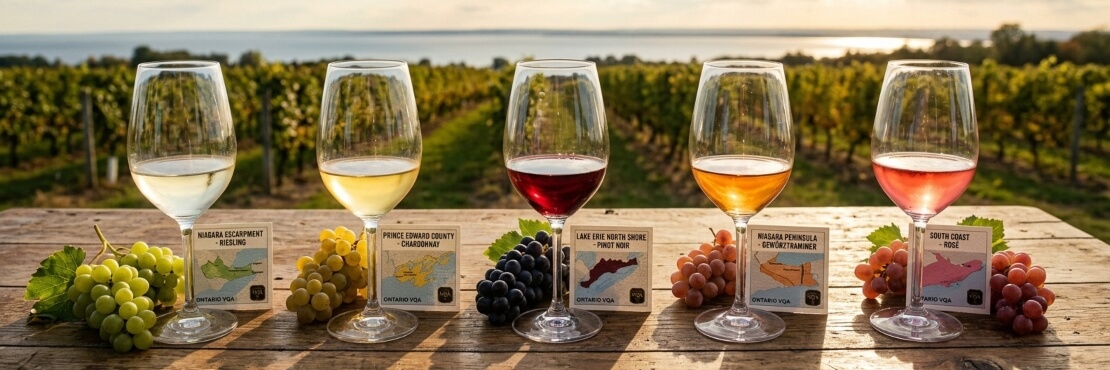
Region | Known For | Key Varietals | Character |
|---|---|---|---|
Niagara Peninsula | Ontario’s flagship, world-class quality | Riesling, Chardonnay, Pinot Noir, Cab Franc | Rich, diverse, established |
Prince Edward County | Cool-climate elegance | Sparkling, Chardonnay, Pinot Noir | Crisp, mineral, refined |
Lake Erie North Shore | Warm-climate reds, emerging | Cabernet Sauvignon, Merlot | Bold, fruit-forward |
Pelee Island | Canada’s southernmost AVA | Gewürztraminer, Pinot Grigio | Aromatic, unique terroir |
Georgian Bay Area | Adventurous micro-vineyards | Experimental, cold-hardy varieties | Frontier, exciting |
Food Pairings at Ontario Wine Bars
Wine | Pairs With | Why It Works |
|---|---|---|
Niagara Riesling (dry) | Local trout, fresh goat cheese | Acidity cuts richness; citrus complements fish |
PEC Chardonnay | Roast chicken, mushroom dishes | Oak notes match umami; body suits heartier plates |
Niagara Pinot Noir | Charcuterie, duck, lamb | Earthy tones align; light tannins won’t overpower |
Ontario Sparkling | Oysters, cheese board starters | Bubbles cleanse palate; festive start to any meal |
Ontario Rosé | Summer salads, grilled vegetables | Fresh and versatile; complements without competing |
Cab Franc (Niagara) | Aged cheddar, braised beef | Pepper notes match sharp cheese; structure suits red meat |
In Grey County and the Meaford area, wine bars often take the ultra-local approach to their food menus as well, sourcing cheese from nearby dairies, charcuterie from regional producers, and produce from neighbouring farms. This creates a fully integrated tasting experience where both the ultra local wine and the food reflect Ontario’s terroir.
“A great wine bar doesn’t just pour wine – it tells the story of a region through every glass and every plate.” – An Ontario sommelier on wine bar philosophy
Ontario’s Coffee Renaissance
Specialty coffee in Ontario has grown far beyond the urban centres. While Toronto remains the epicentre of the province’s coffee culture, smaller communities in Grey County and beyond have embraced the movement with enthusiasm. Locally roasted beans, pour-over methods, and carefully sourced single-origin coffees are now available in towns that a decade ago offered little beyond standard drip.
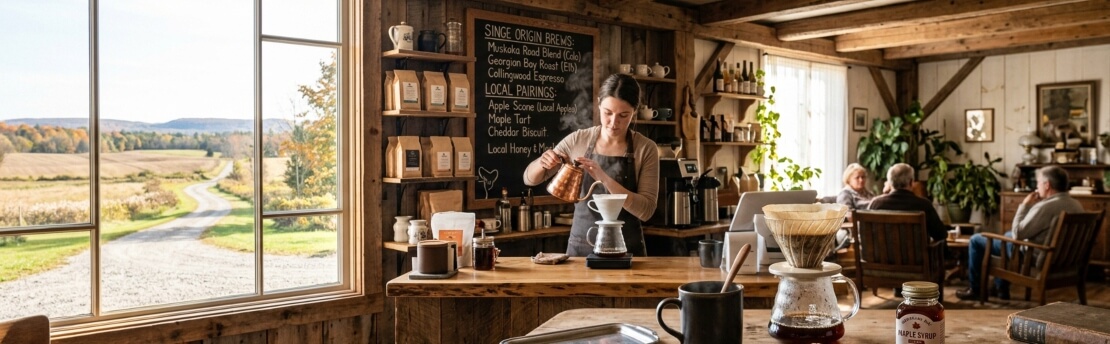
Coffee Culture: Urban vs. Rural Ontario
Coffee Trend | Urban Ontario | Grey County / Rural Ontario |
|---|---|---|
Primary Method | Espresso-based (lattes, cortados) | Pour-over and drip, growing espresso |
Bean Sourcing | Micro-lot single-origin | Locally roasted blends, growing single-origin |
Pairing Culture | Pastries, avocado toast | Apple scones, maple pastries, sourdough |
Atmosphere | Fast-paced, laptop-friendly | Unhurried, conversation-friendly |
Price Range | $5-$8 per drink | $3.50-$6 per drink |
For visitors to Meaford, a morning coffee stop is an essential part of the experience. The rosé coffee and wine lifestyle is increasingly becoming a hallmark of the Ontario food traveller’s itinerary.
Rosé and the Ontario Wine Moment
Rosé wine has had a remarkable run in Ontario, evolving from a summer novelty to a year-round staple. Ontario winemakers, particularly in Niagara and Prince Edward County, have invested in rosé production, creating dry, elegant wines that rival their French and Spanish counterparts.
Did You Know? Ontario rosé production has tripled in the past decade. The province now produces over 50 distinct rosé labels, with Cabernet Franc rosé becoming a signature Ontario style praised on the international stage.
How Ontario Rosé Compares
Characteristic | Ontario Rosé | Provence Rosé (France) | Spanish Rosado |
|---|---|---|---|
Dominant Grape | Cabernet Franc, Pinot Noir | Grenache, Cinsault | Garnacha, Tempranillo |
Style | Dry, crisp, mineral | Pale, delicate, herbal | Fruit-forward, medium body |
Price Point | $14-$25 CAD | $15-$30 CAD | $10-$20 CAD |
Best Paired With | Local cheese, charcuterie | Seafood, salads | Tapas, grilled meats |
In Grey County, the appeal of rosé dovetails with the region’s relaxed, seasonal lifestyle. Summer evenings on a restaurant patio with a glass of Ontario rosé and a view of Georgian Bay – it is a small luxury that captures the essence of rosé coffee and wine culture in the province.
The All-Day Beverage Experience
- Morning (8-10 AM): Start with a cortado and an apple scone at a Grey County café. Watch the harbour wake up.
- Midday (12-2 PM): Pair a light lunch with sparkling water, fresh-pressed apple juice, or a craft soda made with local botanicals.
- Afternoon (3-5 PM): Stop for a tea or an afternoon coffee – many cafes also serve house-blended herbal teas using locally foraged ingredients.
- Evening (6-9 PM): Transition to a wine bar. Begin with a flight of three Ontario wines, add a cheese board, and let the sommelier surprise you.
- Nightcap (9-10 PM): Finish with a glass of rosé on the patio, if the season allows. Or a locally made digestif – Ontario’s craft spirits are rising too.
“Morning coffee and evening rosé aren’t opposites – they’re bookends to the same story about slowing down and savouring where you are.” – A Grey County café-and-wine-bar owner
Wine Bar FAQ for Newcomers
A: Not at all. Ontario wine bars pride themselves on being approachable. Staff are happy to assist, and most venues offer flights so you can taste without committing to a full bottle.
A: By-the-glass service is the norm. Most offer 6-12 wines by the glass, rotating regularly. Bottles are available too, but there is zero pressure.
A: Start with a cheese or charcuterie board – it is the classic wine bar pairing and a great way to taste a variety of local products alongside your wine.
A: It is encouraged! Wine bar staff are passionate about what they pour and genuinely enjoy helping you discover something new.