
Chef Christina and the Ultra Local Culinary Movement in Meaford
In the small town of Meaford, surrounded by farms and the shores of Georgian Bay, Chef Christina created a new standard of authentic cooking. Her philosophy was simple but radical: cook only what the land provides here and now, within a few kilometres. Thanks to this approach, Meaford transformed from a scenic small town into a true culinary destination in Ontario.
A Culinary Vision Rooted in Place
Among the names associated with Meaford’s food identity, Chef Christina – often referred to as Christina Sheardown in local food circles – stands out for a singular commitment to ultra local cuisine. Her approach to cooking was inseparable from the landscape of Grey County – the farms, the seasons, the producers, and the community that sustained them all. While many chefs speak about local sourcing, Christina built her entire culinary practice around it, pushing the boundaries of what ultra local could mean in a small Ontario town.
Note: This profile discusses Chef Christina’s contributions to Meaford’s food culture from a journalistic and culinary history perspective. This website is an independent resource about dining and food culture in the Meaford and Grey County area and is not affiliated with any specific past or present restaurant operation.
The Ultra Local Kitchen Philosophy
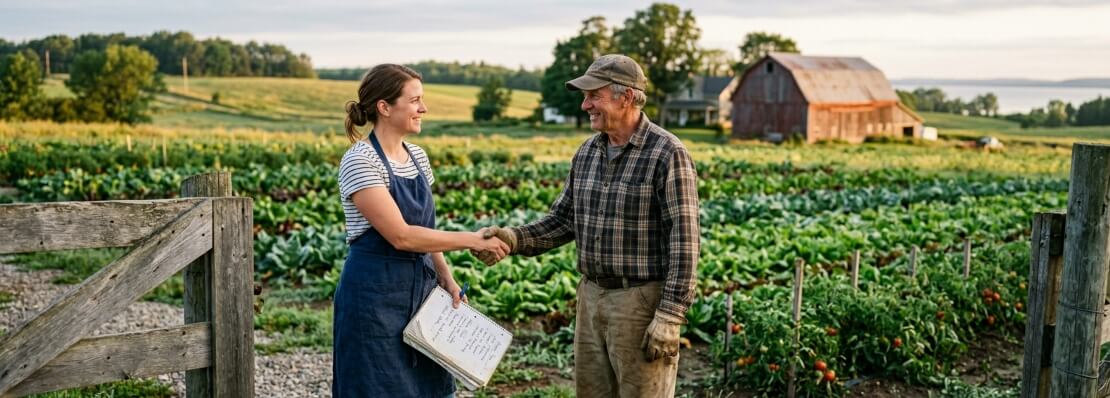
Christina’s kitchen operated on a principle that would challenge most chefs: source as much as possible from within a tight radius of the restaurant. This meant direct relationships with individual farms – not through a distributor, not from a catalogue, but through personal visits, phone calls, and handshake agreements. Her chef menu reflected what was available that week, sometimes that day – a true expression of the land around her.
Christina’s Sourcing Principles
Principle | How It Worked in Practice |
|---|---|
Radical Proximity | Ingredients sourced within 25 km whenever possible |
Personal Relationships | Chef visited farms weekly; knew every supplier by name |
Daily Menu Flexibility | Menu changed based on morning harvest, not quarterly planning |
Whole-Animal / Whole-Plant | Used every part; nose-to-tail, root-to-leaf approach |
Seasonal Honesty | Never imported what wasn’t available locally; preserved instead |
Wine & Beverage Integration | Ontario wines, local ciders, and craft beer only |
This approach produced food that was remarkable in its freshness and its honesty. A plate of seasonal vegetables was not a side dish but a celebration of what the land was producing at that moment. Even the bread and preserves were made in-house, often using heritage grains from nearby growers. People who searched for Christina’s cuisine menu online or looked for Christina’s cuisine photos on social media quickly discovered a style defined by simplicity, seasonality, and deep respect for ingredients.
“I don’t believe in menus that ignore the calendar. If the land isn’t producing it this week, it doesn’t belong on the plate.” – Attributed to Chef Christina on her ultra local philosophy
Impact on Meaford’s Food Identity
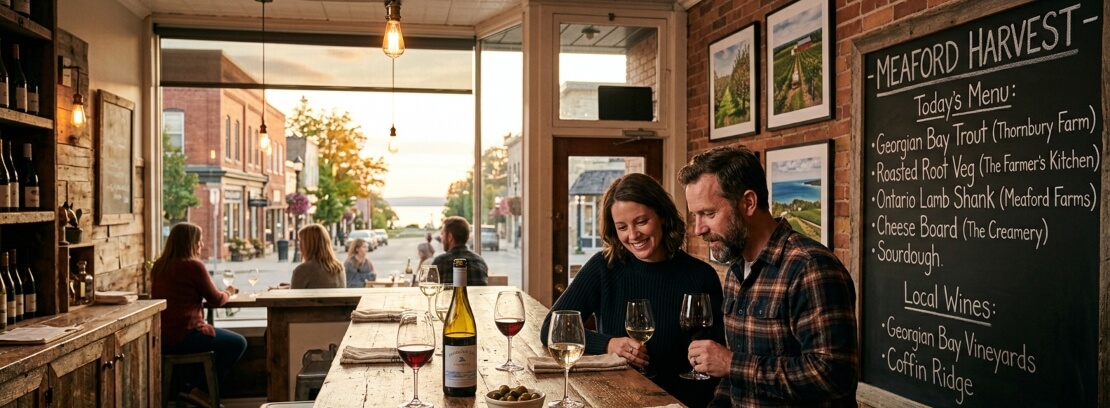
Chef Christina’s work had a measurable impact on how Meaford was perceived as a food destination. Before her influence, the town was known primarily for its natural beauty and small-town charm. Through the lens of ultra local cuisine, Meaford began to attract a different kind of visitor – one interested in food, agriculture, and the connection between the two. The establishment she was associated with – known to many as Sheardown’s Ultra Local Wine Bar and Cuisine – became a reference point for what ultra local dining could look like in a small Ontario town.
Measurable Community Effects
Area of Impact | Before | After Christina’s Influence |
|---|---|---|
Meaford’s food reputation | Known for natural beauty | Recognized as a food destination |
Farm-to-restaurant sales | Primarily wholesale channels | Direct relationships, fair pricing |
Culinary tourism | Minimal, pass-through visitors | Dedicated food trips from GTA |
Other restaurant standards | Conventional sourcing | Local sourcing became the norm |
Online visibility | Low search interest | Increased searches: Sheardowns Meaford, etc. |
International recognition | Not listed | TripAdvisor, AutoReserve, food blogs |
This shift benefited the entire community. Farms that had relied primarily on wholesale markets found new customers in local restaurants. International visitors who found the restaurant through platforms like TripAdvisor, where it was listed under the Meaford restaurants category, helped spread its reputation beyond Ontario’s borders.
Community and Collaboration
A key element of Christina’s approach was collaboration rather than competition. She actively promoted neighbouring farms, recommended other local restaurants to visitors, and participated in community food events.
Did You Know? Chef Christina’s collaborative approach inspired what local food writers have called the “Meaford Model” – a framework where competing restaurants share suppliers, promote each other’s events, and collectively market the town as a food destination rather than competing for individual market share.
The connections she built between kitchen and farm were not transactional but relational. Farmers were treated as creative partners, not just suppliers. When a grower experimented with a new variety or a heritage breed, Christina was often among the first to feature it, giving agricultural innovation a platform and a market.
A Lasting Influence on Grey County Dining
Chef Christina’s contributions to Meaford’s food culture continue to resonate even as the culinary landscape evolves. The standards she set for local sourcing, seasonal cooking, and community engagement have become the foundation on which newer establishments build.
“She didn’t just feed people – she taught a whole town that food could be about something bigger than what’s on the plate.” – A Meaford community member on Chef Christina’s legacy
The story of Chef Christina and Meaford is ultimately a story about what happens when talent, conviction, and community align. It is a reminder that great food is not just about technique or ingredients – it is about the relationships and values that bring those elements together on a plate.